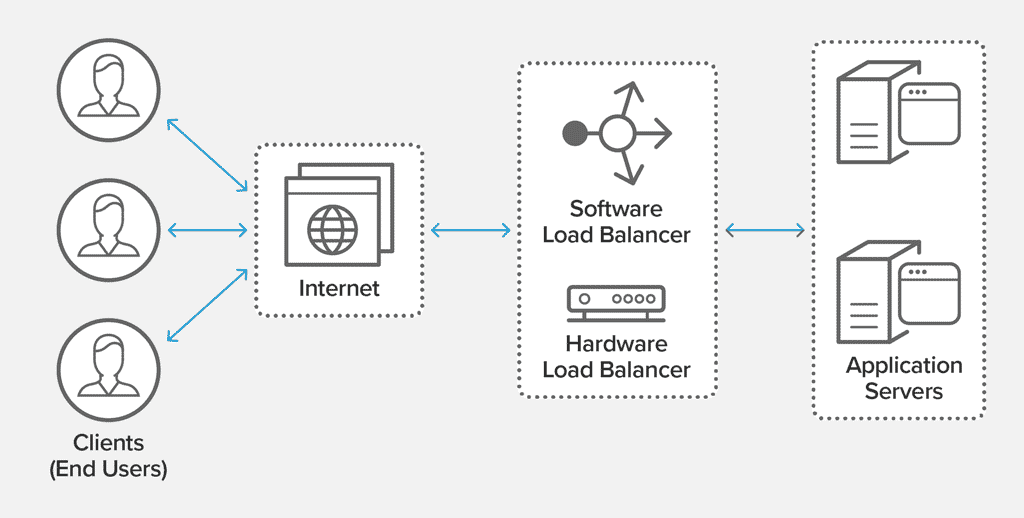
Load balancers are critical components in modern web and application infrastructure. They ensure seamless distribution of traffic across servers, improving scalability, reliability, and performance. However, not all load balancers are created equal—there are distinct differences between Layer 4 and Layer 7 load balancers. Let’s dive into what sets them apart and how to choose the right one for your application. 🔻
The OSI Model Connection
To understand the difference, we need a quick refresher on the OSI model:
- Layer 4 (Transport Layer): Focuses on network-level information like IP addresses, ports, and transport protocols (TCP/UDP).
- Layer 7 (Application Layer): This layer interprets and processes the actual content of the communication (e.g., HTTP headers, URLs, cookies).
These layers define how load balancers process and route traffic.
What is a Layer 7 Load Balancer?
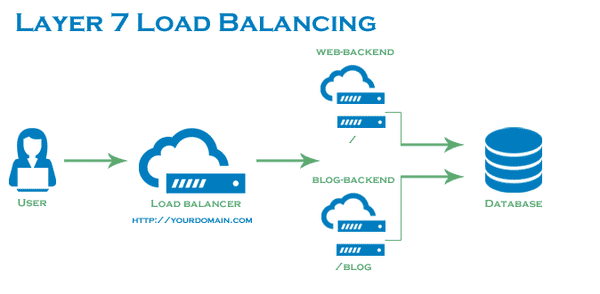
Layer 7 load balancers operate at the Application Layer and can inspect the content of application requests. They understand protocols like HTTP, HTTPS, WebSockets, and gRPC.
Check the diagram below to see a simple example of layer 7 load balancing: 🔻
Key Features of Layer 7 Load Balancers
- Content-Based Routing: Directs traffic based on URLs, headers, or cookies (e.g.,
/apito one server,/imagesto another). - SSL Termination: Offloads SSL/TLS decryption, reducing backend server load.
- Advanced Features: Supports caching, compression, and authentication.
L7 LB - Use Case
- Web applications that need path-based routing.
- Microservices architectures (e.g., directing requests to different services based on API paths).
- Applications requiring SSL offloading and authentication.
L7 LB - Examples
- AWS Application Load Balancer (ALB)
- NGINX (configured for Layer 7)
- HAProxy (Layer 7 mode)
What is a Layer 4 Load Balancer?
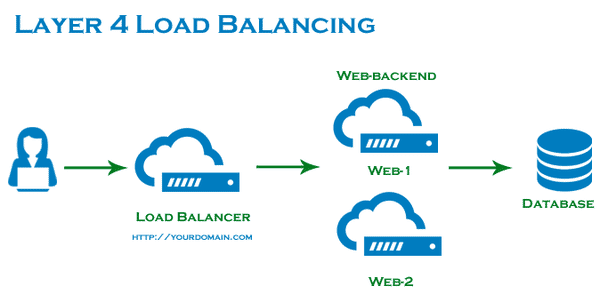
Layer 4 load balancers operate at the Transport Layer, routing traffic based on network-level information like IP addresses and port numbers.
Check the diagram below to see a simple example of layer 4 load balancing: 🔻
Key Features of Layer 4 Load Balancers
- Protocol-Agnostic Routing: Handles TCP, UDP, and other transport protocols.
- High Performance: Faster than Layer 7 because it doesn’t inspect application-level content.
- Simple Load Distribution: Balances traffic based on IP and port without deep packet inspection.
L4 LB - Use Case
- High-throughput systems where speed and simplicity are critical.
- Scenarios involving non-HTTP protocols like databases, gaming servers, or streaming services.
- Applications that don’t require content-based routing.
L4 LB - Examples
- AWS Network Load Balancer (NLB)
- Classic Elastic Load Balancer (ELB)
- HAProxy (Layer 4 mode)
Key Differences Between Layer 7 and Layer 4 Load Balancers
| Feature | Layer 7 Load Balancer | Layer 4 Load Balancer |
|---|---|---|
| OSI Layer | Application Layer (7) | Transport Layer (4) |
| Routing Basis | Content-based (URLs, headers, cookies, etc.) | Network-based (IP, port, protocol) |
| Supported Protocols | HTTP, HTTPS, gRPC, WebSockets | TCP, UDP, and other transport protocols |
| Performance | Slower due to deep packet inspection | Faster due to simpler routing logic |
| SSL Termination | Supported | Not supported directly |
| Caching and Compression | Supported | Not supported |
| Ideal Use Case | Web apps, microservices, API-based systems | High-throughput systems, non-HTTP protocols |
How to Choose the Right Load Balancer
- Choose Layer 7 if:
- Your application requires content-based routing (e.g., directing specific URLs to different services).
- You need advanced features like SSL termination, authentication, or caching.
- Your architecture includes microservices or complex web applications.
- Choose Layer 4 if:
- Your application prioritizes performance and speed.
- You’re dealing with non-HTTP protocols (e.g., database traffic, gaming, or media streaming).
- Your use case is simple and doesn’t require application-level processing.
Conclusion
Layer 4 and Layer 7 load balancers each serve specific purposes. While Layer 7 provides powerful application-level routing and features for modern web applications, Layer 4 excels in high-performance, protocol-agnostic scenarios. Understanding the differences is key to making the right choice for your infrastructure needs.
Further Reading: