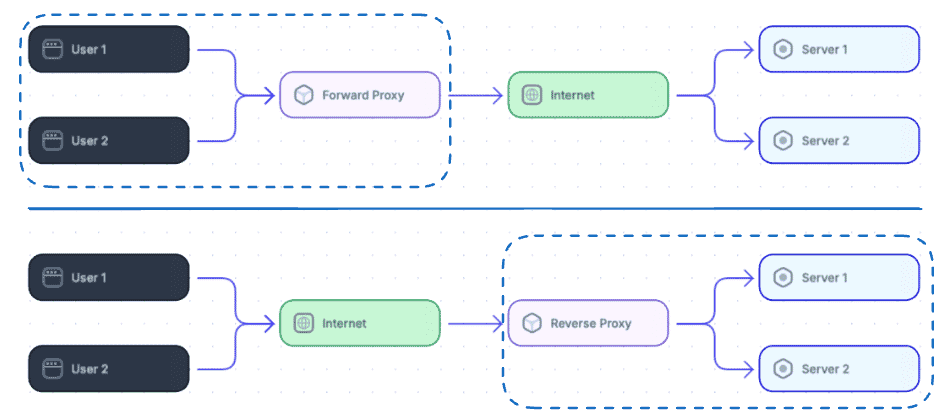
In the realm of networking and web infrastructure, proxies play a crucial role in facilitating communication, enhancing security, and optimizing performance. Among the various types of proxies, forward proxy and reverse proxy stand out as fundamental building blocks. This post delves into the detailed workings, use cases, and differences between these two types of proxies. 🔻
What is a Forward Proxy?
A forward proxy is an intermediary server that placed between a client and a destination server. It acts on behalf of the client, forwarding requests to the desired resource and returning the server’s response to the client.
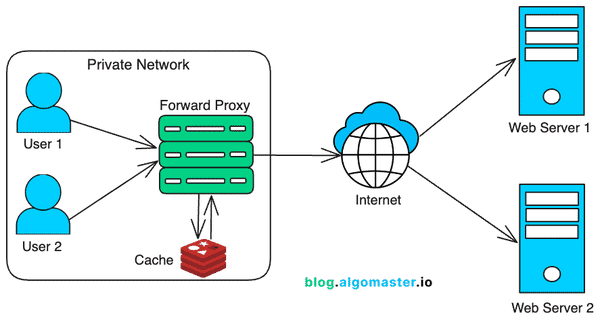
FP - How It Works:
- Client Request: The client sends a request to the forward proxy.
- Request Forwarding: The proxy evaluates the request and forwards it to the destination server.
- Server Response: The destination server responds to the proxy.
- Response Delivery: The proxy sends the server’s response to the client.
FP - Use Cases:
- Content Filtering: Organizations use forward proxies to filter web content and block access to specific websites.
- Anonymity: Individuals use forward proxies to hide their IP addresses, enhancing privacy.
- Caching: Forward proxies cache content to reduce latency and bandwidth usage.
- Access Control: Proxies can restrict access to certain resources based on policies.
FP - Example:
A company might use a forward proxy to allow employees to access external websites while monitoring and controlling their activity.
What is a Reverse Proxy?
A reverse proxy is an intermediary server that sits between a client and one or more backend servers. It intercepts client requests, forwards them to the appropriate backend server, and returns the server’s response to the client as if it originated from the proxy.
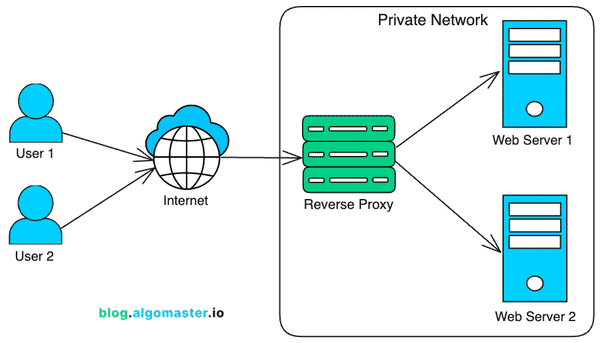
RP - How It Works:
- Client Request: The client sends a request to the reverse proxy.
- Load Balancing/Processing: The proxy forwards the request to a suitable backend server.
- Server Response: The backend server processes the request and sends the response to the proxy.
- Response Delivery: The proxy returns the response to the client.
RP - Use Cases:
- Load Balancing: Reverse proxies distribute incoming traffic among multiple servers to ensure availability and performance.
- Security: They shield backend servers from direct exposure to the internet, mitigating threats.
- SSL Termination: Reverse proxies handle SSL encryption and decryption, reducing the load on backend servers.
- Caching: Reverse proxies cache responses to improve speed and reduce load on backend servers.
RP - Example:
A website like Amazon might use a reverse proxy to route client requests to specific servers based on load and availability while keeping backend servers secure.
Key Differences
| Aspect | Forward Proxy | Reverse Proxy |
|---|---|---|
| Client Interaction | Sits between the client and destination server | Sits between the client and backend servers |
| Purpose | Acts on behalf of the client | Acts on behalf of the server |
| Use Cases | Privacy, filtering, caching | Load balancing, security, SSL termination |
| Visibility | Hides client details from servers | Hides server details from clients |
When to Use Which?
- Use a forward proxy when:
- You need to anonymize client requests.
- You want to enforce access control and filtering.
- Caching at the client side is crucial.
- Use a reverse proxy when:
- You need to distribute traffic efficiently among multiple servers.
- Security and hiding backend server details are priorities.
- SSL termination or caching on the server side is required.
Conclusion 🔻
Forward proxies and reverse proxies serve distinct purposes in the networking ecosystem. While a forward proxy primarily caters to client needs, a reverse proxy focuses on optimizing and securing server-side operations. Understanding their differences and use cases enables organizations and developers to implement robust and efficient systems that cater to their specific requirements.